Automobile Smartphone Holders with MagSafe and Qi2: What Matters for Navigation, Charging and Safety
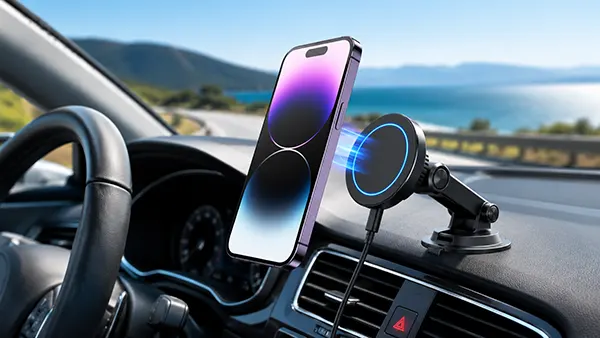
Smartphones have become an essential part of modern driving. They provide turn-by-turn navigation, hands-free communication, music streaming and access to real-time traffic information. As a result, the quality of a vehicle phone holder is no longer a minor convenience but an important factor affecting comfort, visibility and road safety. The emergence of MagSafe and the newer Qi2 wireless charging standard has changed how drivers mount and charge their devices, making it easier to keep a phone secure while maintaining battery levels during long journeys.
Understanding MagSafe and Qi2 in Vehicle Phone Holders
MagSafe was introduced by Apple as a magnetic attachment system that aligns compatible devices with charging accessories. In a vehicle environment, this technology allows a smartphone to attach quickly and accurately to a holder without requiring mechanical clamps. The magnetic connection simplifies everyday use and reduces the time a driver spends handling the device.
Qi2 is the latest generation of the Wireless Power Consortium’s charging standard. Released with support from major technology manufacturers, Qi2 incorporates a magnetic alignment profile inspired by MagSafe. This allows compatible Android and Apple devices to achieve more efficient wireless charging while ensuring correct positioning on charging surfaces.
When choosing a car holder, drivers should verify whether the accessory merely supports magnetic mounting or also provides certified wireless charging. Some products offer magnetic attachment only, while others combine strong magnets with Qi2-certified charging capabilities. Understanding this distinction helps avoid disappointment and ensures the holder meets practical requirements.
Why Magnetic Alignment Improves Everyday Driving
Accurate alignment is one of the biggest advantages of MagSafe and Qi2 systems. Traditional wireless chargers may lose efficiency if the phone shifts during driving. Magnetic positioning keeps charging coils aligned, reducing energy loss and improving charging consistency.
The magnetic attachment mechanism also allows a driver to place or remove a phone with one hand. This is particularly useful when entering or leaving a vehicle, reducing distractions and eliminating the need to adjust clamps or brackets.
Another benefit is reduced wear on charging ports. Drivers who previously relied on cables multiple times each day can minimise connector usage by switching to wireless charging. Over time, this may help preserve the condition of both charging ports and cables.
Key Factors for Reliable Navigation and Charging
The mounting location plays a critical role in navigation usability. A holder should be positioned where directions can be viewed quickly without obstructing the road ahead. Dashboard-mounted and air-vent-mounted solutions remain among the most common options, although the ideal location depends on vehicle design and driver preference.
Charging performance is equally important. Navigation applications, GPS services and mobile data connections consume significant battery power. A high-quality Qi2 charger can help offset this energy consumption, allowing the device to maintain or increase its charge level during extended journeys.
Heat management should not be overlooked. Wireless charging naturally generates heat, and direct sunlight inside a vehicle can increase device temperatures further. Premium holders often include ventilation channels, aluminium heat-dissipation components or active cooling systems designed to maintain stable charging performance.
Choosing the Right Holder for Long Journeys
Drivers who frequently travel long distances should prioritise charging output and mounting stability. Rough road surfaces can create constant vibration, making a strong magnetic connection essential. A holder with high-strength magnets helps prevent unwanted movement while keeping navigation information clearly visible.
Adjustability is another important consideration. A holder that supports both portrait and landscape orientation provides flexibility for different navigation applications. Some drivers prefer landscape mode for maps, while portrait orientation may offer better visibility of upcoming directions.
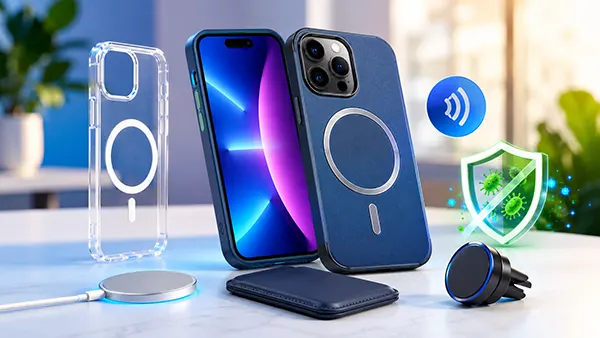
Compatibility should always be confirmed before purchase. Although many newer devices support Qi2, not all smartphones include magnetic charging hardware. In some cases, a compatible magnetic case or adapter ring may be required to achieve proper attachment and charging performance.
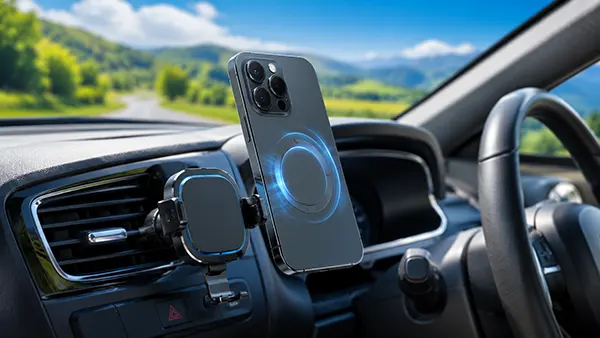
Safety Considerations When Using MagSafe and Qi2 Holders
Road safety should remain the primary consideration when selecting any smartphone accessory for a vehicle. A properly mounted phone reduces the temptation to hold the device while driving and helps maintain compliance with hands-free driving regulations that apply in many countries.
The holder itself should not block critical vehicle controls, airbags or visibility through the windscreen. Before installation, drivers should evaluate how the mount affects sight lines and access to dashboard functions. Even a high-quality holder can become problematic if positioned incorrectly.
Build quality also matters from a safety perspective. Secure mounting mechanisms, durable materials and reliable magnetic retention reduce the risk of a phone becoming detached during sudden braking, sharp turns or collisions. Products tested for automotive use generally provide greater confidence in demanding driving conditions.
Best Practices for Safe Daily Use
Navigation routes should be entered before starting a journey whenever possible. Although voice assistants can reduce interaction while driving, preparing destinations in advance remains the safest approach.
Drivers should periodically inspect mounting components for signs of wear. Adhesive mounts, vent clips and adjustable joints may loosen over time due to temperature changes and constant vibration. Regular checks help maintain stability and prevent unexpected failures.
Finally, users should remember that a phone holder is designed to support safe access to information rather than encourage device interaction. When used correctly, a MagSafe or Qi2 holder can contribute to a more organised driving experience by keeping navigation visible, maintaining battery life and reducing unnecessary distractions on the road.