Accessories for Ultra-Thin and Foldable Smartphones in 2026: Cases, Hinge Protection and Magnetic Mounts
Smartphones are becoming thinner, but protecting them is no longer as simple as buying a conventional case. In 2026, devices such as the Samsung Galaxy Z Fold8, Google Pixel 11 Pro Fold, HONOR Magic V6 and Apple’s first foldable iPhone Duo demonstrate how much phone design has changed. Alongside them, ultra-slim models such as the iPhone Air create different challenges for accessory manufacturers. A protective cover must fit closely without adding excessive thickness, while a folding phone needs enough clearance around its hinge to open and close normally. Magnetic charging and mounting accessories introduce another consideration: not every case works equally well with every charger or holder. Choosing suitable accessories therefore involves more than appearance. The materials, attachment methods and compatibility details determine whether a case protects the handset, makes it easier to handle or introduces unnecessary inconvenience.
Protective Cases for Ultra-Thin and Foldable Smartphones
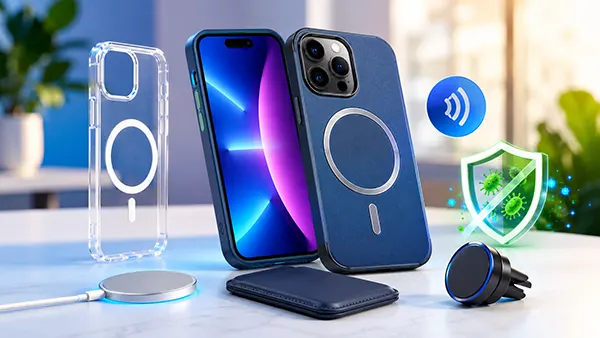
The main attraction of an ultra-thin smartphone is its comfortable, lightweight design. Apple’s iPhone Air, introduced with a body measuring just 5.6 mm thick, illustrates why conventional protective cases can feel disproportionately bulky on these devices. Manufacturers now offer minimalist back covers, slim bumpers and reinforced cases designed around the exact dimensions of individual handsets. Each approach offers a different balance between protection and convenience. A bumper mainly covers the edges, leaving much of the rear exposed, while a full case offers broader protection against scratches and everyday knocks. Neither option makes a phone immune to damage, and exceptionally thin covers generally provide less cushioning than thicker alternatives.
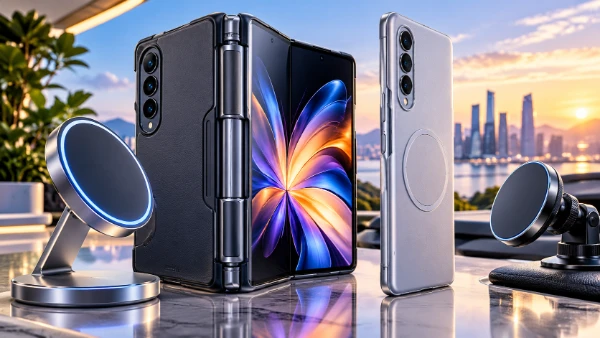
Foldable smartphones require a more specialised construction because their bodies move. A typical book-style foldable case consists of two sections fitted around the front and rear halves, leaving space for the hinge. Flip-style handsets have a different arrangement, with separate pieces protecting their upper and lower sections. These distinctions explain why cases are rarely interchangeable, even between successive generations of the same product. Samsung, for example, confirms that older Galaxy Z Fold7 cases do not fit the Galaxy Z Fold8 because the newer handset has different dimensions. The iPhone Duo also has its own two-part protective case, introduced by Apple in September 2026. Buyers should therefore check the complete model name rather than relying on similar screen sizes or product photographs.
The quality of a case depends heavily on its fit around vulnerable areas. Slightly raised edges can help keep the outer display away from a flat table, while a protective rim around the camera housing reduces direct contact with surfaces. However, these features must not interfere with gestures near the screen edges, camera operation or the fingerprint sensor. On folding phones, poorly positioned corners may catch when the handset closes, while loose front frames can move during use. Some two-piece cases use adhesive strips to secure their thinner sections. These should be applied only as instructed, since repeated removal can weaken their grip. A suitable case should remain secure without requiring force to install or remove.
Case Materials, Grip and Everyday Protection
Silicone, thermoplastic polyurethane, polycarbonate and aramid fibre are among the materials commonly found in protective accessories. Silicone and other soft-touch finishes provide a comfortable grip and can help absorb minor impacts, although some attract lint or become marked through regular handling. Polycarbonate offers a firmer structure and is frequently used in transparent cases. Aramid fibre is valued for combining low weight with a relatively slim construction, making it useful for people who want to retain a handset’s original dimensions. Material alone does not establish how protective a case will be, however. Its thickness, corner design, coverage and fit also influence the amount of protection it provides.
Manufacturers increasingly combine slim designs with practical features. Apple’s official iPhone Air Case with MagSafe, for instance, has a translucent back panel measuring just 0.9 mm thick, supported by a polycarbonate frame. The iPhone Duo Folio takes another approach, incorporating a folding stand that supports different viewing angles. Samsung’s Galaxy Z Fold8 accessory range includes aramid-based Carbon cases, silicone magnetic covers and transparent alternatives. These examples show why the lightest option is not necessarily the most convenient. Someone who regularly watches videos may benefit from a built-in stand, whereas a person who carries a handset in a narrow pocket may prefer a simpler cover without moving parts.
Grip deserves particular attention because ultra-thin phones can be difficult to hold securely, especially when their surfaces are smooth. Textured sides, slightly thicker corners and soft-touch finishes can improve handling without dramatically changing the device’s shape. For foldables, consider how the case feels both closed and fully opened. A comfortable grip in phone mode may become awkward when the large inner display is in use. It is also worth checking whether the cover interferes with screen protectors or wireless charging. An accessory should make the handset easier to use throughout the day, not require the owner to remove it repeatedly to access essential functions.
Hinge Protection for Foldable Phones in 2026
The hinge is one of the defining components of a foldable smartphone. It allows the device to change shape repeatedly while keeping its two halves aligned. Although modern hinges are engineered for extensive daily use, exposed external surfaces can still suffer scratches and impacts. The most suitable protection depends on how the phone folds and how its hinge is constructed. Some cases leave this area uncovered to preserve a slim profile, while others incorporate a moving protective section. A hinge cover is particularly relevant for people who regularly carry their phones alongside keys, place them in bags or use them in environments where accidental knocks are more likely.
Dedicated hinge protection is now available for several 2026 models. Samsung offers a Galaxy Z Fold8 Hinge Protection Magnet Case with a transparent body and a separate protective section over the hinge. Google has also introduced an official Pixelsnap Case for the Pixel 11 Pro Fold featuring an integrated hinge cover and shock-absorbing construction. These designs aim to protect areas that ordinary two-piece cases may leave exposed. They nevertheless introduce additional material around the folding mechanism, which can increase the handset’s overall dimensions. A hinge cover should be regarded as an extra protective feature rather than a guarantee against damage from drops, pressure or particles entering the mechanism.
There are important differences between a fixed spine cover, a sliding section and a hinged flap that moves as the phone opens. The most effective design is one that follows the handset’s movement without catching, rubbing or preventing it from opening fully. Before relying on a new case, unfold the device slowly and check that the protective section moves freely. Look for unusual resistance, pressure points and contact with the camera housing or screen edges. Some bulky hinge covers also prevent a phone from lying flat on a table, which can make typing or using an additional stand less comfortable. Protection should never come at the expense of the folding mechanism’s normal operation.
Protecting Flexible Displays Without Damaging Them
The inner display of a foldable smartphone needs different care from an ordinary glass screen. Samsung’s Galaxy Z Fold8, for example, comes with a factory-fitted protective film specifically designed for its flexible main display. Samsung advises owners not to remove this film themselves or apply an additional unapproved layer, as doing so can damage the screen. If the original film starts lifting, bubbling or deteriorating, an authorised service centre is the appropriate place to arrange replacement. Applying a conventional tempered-glass protector across the folding area is not a suitable alternative. The outer display, by contrast, can use a compatible protective film designed for that particular model.
Not every manufacturer approaches screen protection in exactly the same way. HONOR describes the Magic V6 as having a strengthened inner display designed to provide protection without requiring an additional screen protector. This does not mean that every folding screen should be left uncovered or that all protective films are interchangeable. Owners should follow the instructions supplied with their specific handset. For exterior screens, tempered glass can offer scratch protection and a familiar feel, provided the protector does not interfere with the surrounding case. Anti-reflective films are another option for reducing reflections outdoors, although their appearance and resistance to scratching vary between products.
Regular cleaning and sensible handling remain essential, even with a protective case fitted. Sand, grit and small hard objects can cause problems if trapped between the two halves of a folding phone. Before closing the handset, check that nothing is resting on the inner display. Clean accessible surfaces gently with a suitable microfibre cloth, following the manufacturer’s guidance, and avoid forcing debris out of the hinge using sharp objects. Do not assume that a water-resistance rating provides complete protection against dust or particles. The HONOR Magic V6 carries IP68 and IP69 ratings under specified test conditions, but those ratings do not make careless handling risk-free. Keeping the phone away from abrasive materials is still worthwhile.
Magnetic Mounts and Wireless Charging Accessories in 2026
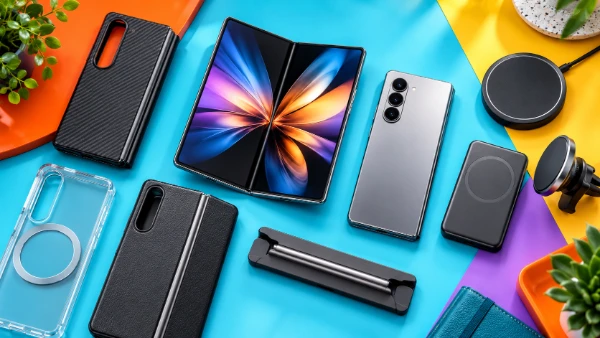
Magnetic accessories have become more relevant as manufacturers introduce slimmer phones and larger foldable displays. Instead of fastening a handset between mechanical clamps, compatible mounts use magnets to hold it against a charging surface, desk stand or car holder. Apple’s MagSafe accessories are familiar examples, while Google’s Pixelsnap system brings similar convenience to compatible Pixel handsets. The Pixel 11 Pro Fold belongs to this expanding range of magnetic accessories, and Apple’s iPhone Duo supports MagSafe and compatible Qi2 charging products. Magnetic attachments can also support wallets, removable grips and portable batteries. Their main advantage is convenience, but a secure attachment depends on the handset, case and accessory being designed to work together.
Qi2 is an important standard to understand when buying wireless charging equipment in 2026. Developed by the Wireless Power Consortium, it uses magnetic alignment in compatible products to position the phone correctly against the charger. Original Qi2 charging products support up to 15 W, while the newer Qi2 25W specification allows higher charging power where both devices support it. This figure represents a capability, not a promise that every handset will charge at that speed. Some phones contain their own magnetic alignment system, while others require a suitable magnetic case. A case advertised simply as magnetic does not automatically provide certified Qi2 compatibility, and a magnetic mounting ring alone does not add wireless charging to a phone that lacks it.
The Galaxy Z Fold8 provides a useful example of the importance of matching accessories. Samsung offers magnetic cases designed to position compatible chargers and power banks against the handset. The company also provides a magnetic wireless charging pad and a portable magnetic battery. For everyday use, positioning matters as much as the connection itself. A case must align its magnets with the charging area, and unusually thick covers or metal attachments can reduce charging efficiency. Large camera housings may also prevent certain battery packs or charging stands from sitting flat. Buyers should confirm compatibility with the exact phone and case combination rather than assuming that a strong magnetic connection guarantees reliable charging.
Choosing Safe Magnetic Car Mounts, Stands and Power Banks
Magnetic car mounts need particular care when used with foldable smartphones. A compact handset may remain secure on a small holder, but opening a book-style foldable changes its balance and increases the area exposed to movement. The mount should be rated for the device’s weight and remain stable over bumps, braking and turns. Dashboard and securely attached windscreen mounts may provide a firmer base than lightweight air-vent clips, depending on the vehicle. Positioning also matters: the phone must not obstruct the driver’s view or important controls. If the mount is intended for use with the device unfolded, its manufacturer should explicitly support that arrangement.
Magnetic power banks and desktop stands offer practical advantages, although they deserve the same compatibility checks as car holders. A portable battery adds weight and thickness, so it may undermine the convenience of an exceptionally slim handset. It should attach firmly without pressing against the camera housing or extending awkwardly beyond the phone’s edges. Wireless charging also produces heat, particularly when the device is being used intensively. Excessive warmth, repeated charging interruptions or unstable attachment are reasons to stop and check the arrangement. Strong magnetic accessories can also affect certain phone functions or magnet-sensitive objects. Samsung advises keeping its magnetic accessories at least 15 cm away from implanted medical devices and consulting the relevant medical-device guidance.
Before buying any accessory, confirm the exact handset model, the case’s coverage and whether its design accommodates the camera housing, charging equipment and full folding movement. For magnetic chargers, look for the relevant Qi or Qi2 certification and check the manufacturer’s stated charging compatibility. The Wireless Power Consortium maintains a public database of certified products, making it possible to verify claims rather than relying solely on packaging descriptions. For cases and hinge covers, official product specifications, fitting instructions and a reasonable returns policy are equally valuable. The most useful combination is generally straightforward: a properly fitted case, suitable screen protection and magnetic accessories that work securely with the phone’s intended charging and mounting arrangements. Together, these choices can preserve everyday convenience while reducing avoidable wear.